
When Sarah Thomas was 12 years old, a routine sports physical before cheerleading season changed the course of her life, although she wouldn’t fully understand how much until nearly a decade later.
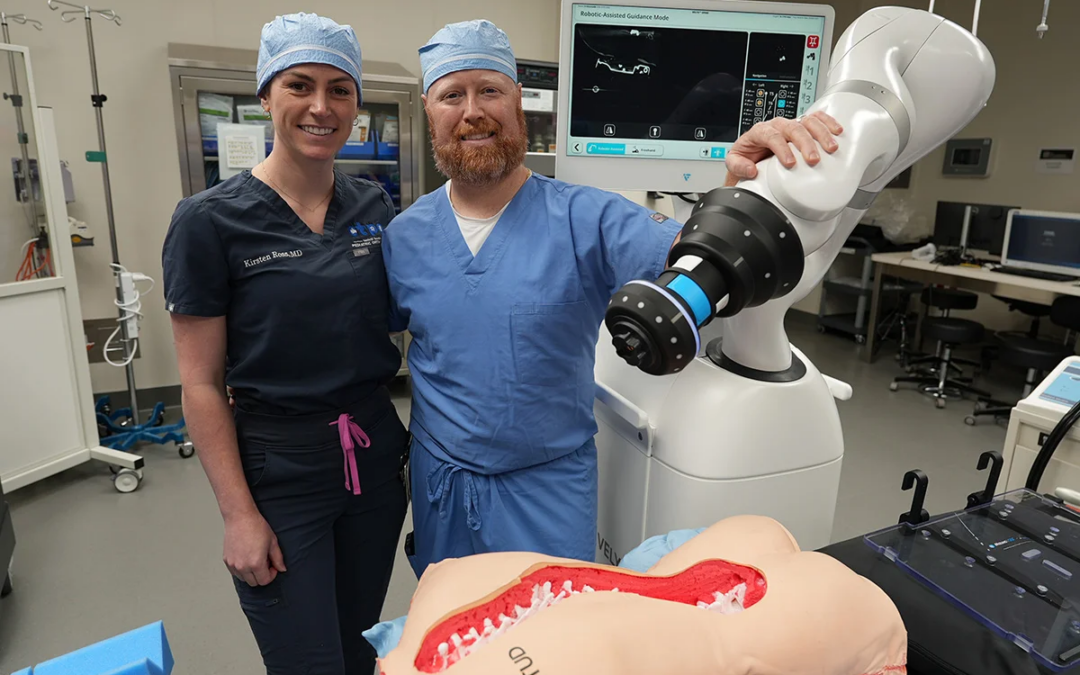
During her exam, a slight curve in her spine caught her pediatrician’s eye. Within weeks, Sarah and her mother found themselves sitting across from Dr. Brian Kaufman, a pediatric spine, neuromuscular and skeletal dysplasia specialist at Dell Children’s, beginning what would become a years-long relationship rooted in trust, curiosity, and care as they worked to correct her scoliosis.
“My mom and I were just distraught over my diagnosis,” Sarah says. “But Dr. Kaufman was really good about reassuring us and making sure we knew everything was going to be okay.”
Growing Up with Scoliosis
Through bracing and periodic check-ups, Sarah learned to live with her scoliosis diagnosis. An active, determined teenager, she threw herself into competitive cheerleading and weightlifting throughout adolescence, her strong core largely keeping discomfort at bay.
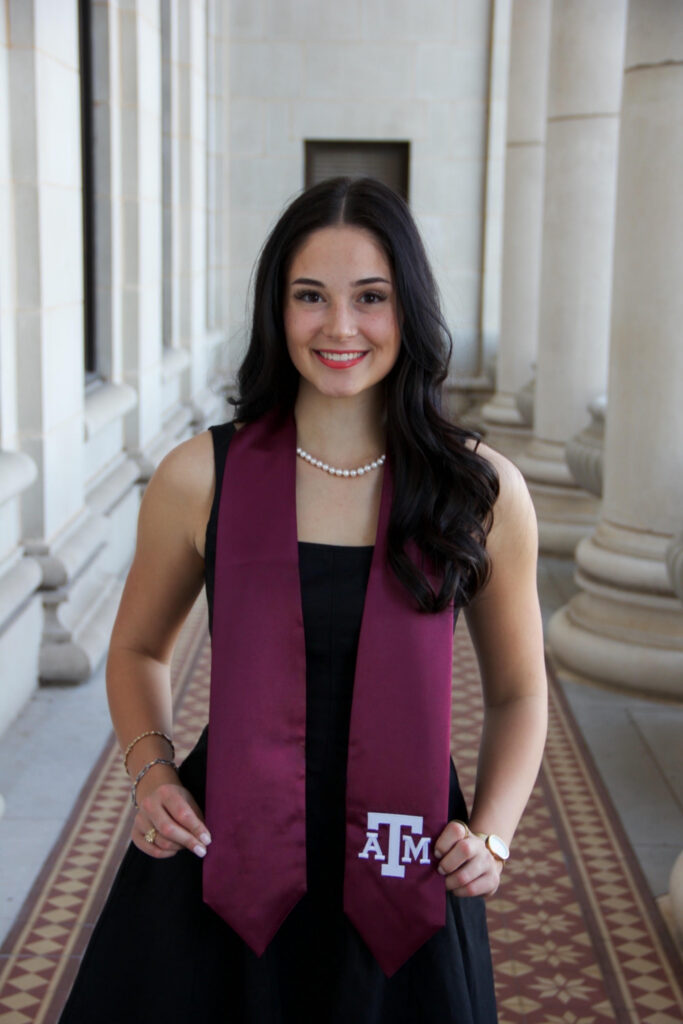 As she packed her bags for Texas A&M University, where she would earn a bachelor’s degree in neuroscience, scoliosis had become almost an afterthought.
Almost.
College life slowed her workout routine, and gradually, back pain began to surface. She noticed a familiar ache when she lay down at night and became more conscious of the visible curvature of her back. Then, while working as a medical assistant for an adult spine surgeon in College Station, something clicked.
“I see so many patients who are in their 60s and 70s getting spine surgery,” she explains, “and it’s just so much harder to recover. I was young and had just finished my classes. I saw that as the perfect opportunity to correct my scoliosis.”
She picked up the phone and called Dr. Kaufman.
Seeing It for Herself, Three Times
What makes Sarah’s story truly remarkable isn’t just that she chose surgery at 21. It’s that she asked to witness it first.
Already on a pre-med track, Sarah had mentioned her career aspirations to Dr. Kaufman during a follow-up appointment in her freshman year. His response was immediate. He invited Sarah to shadow him and observe surgeries up close so she could see what the work and the procedure really looked like.
She took him up on it.
Over the years leading up to her own operation, Sarah scrubbed in and observed three posterior spinal fusions performed by Dr. Kaufman. She watched as instruments were laid out with painstaking precision, residents and medical students leaned in to learn, and her surgeon moved through each step with calm, unhurried confidence, often with music playing in the background.
“He just handles it like it’s nothing,” she says. “It’s obviously a very routine surgery for him. Honestly, I didn’t have any worries going into mine because he’s just so capable. Why would I worry?”
The Surgery and After
In late January 2026, Sarah underwent posterior spinal fusion at Dell Children’s Medical Center North. The experience, she says, exceeded every expectation.
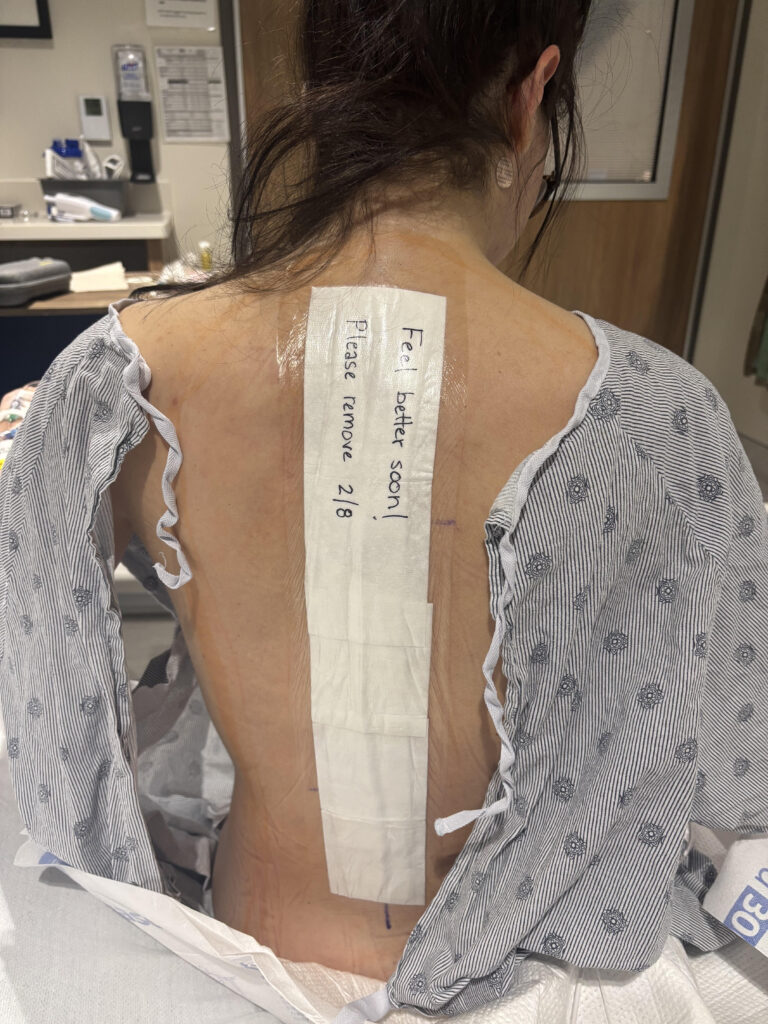 “The facility was really nice. You can tell that a lot of thought was put into that campus and that the people there really value where they’re at.”
Her older sister stayed by her side throughout her recovery, and Sarah is quick to note how seamlessly the care team accommodated that.
“You hear so often that it’s very uncomfortable for family members to stay in hospitals. But she had no complaints. It was a really good experience.”
The outcome was a straighter spine, a stronger foundation, and a bonus she hadn’t anticipated. She grew nearly an inch.
“I had a growth spurt in my 20s, which was pretty cool,” Sarah says.
The Doctor Who Truly Gets It
Ask Sarah what makes Dr. Kaufman exceptional, and she doesn’t hesitate.
“Every time I’ve gone to see Dr. Kaufman, it feels like he remembers the last thing we were talking about, which is crazy because he’s got to be so busy. You can tell he really cares. It’s not just ‘Okay, next case.’ He really looks into each patient and wants to bring out the best for them.”
That attentiveness has extended well beyond the exam room. Dr. Kaufman served as a reference for Sarah’s current position and has written letters of recommendation as she prepares her medical school applications. The relationship that began with a worried 12-year-old and her mother has evolved into something that, in many ways, resembles mentorship.
“I think you have to have a kind of childlike curiosity and wonder to work with kids,” Sarah says. “And that extends to the rest of life. He’s so willing to teach, whether it’s a resident, a medical student, or just me, still in undergrad. He’d explain everything at a level I could understand.”
What’s Next for Sarah
This fall, Sarah will apply to medical school. She hopes to return to Austin, ideally to Dell Medical School, to train in pediatrics. Her experience alongside Dr. Kaufman, combined with what she witnessed caring for adult spine patients facing longer, more difficult recoveries, has made that decision feel clear.
“Working with kids, the stakes are really high,” she says, “but they’re honest with you. They don’t pretend. I think I prefer that.” She smiles. “I’ve seen both sides now. I prefer pediatrics.”
For now, she’s spending her gap year building patient hours, gaining experience, and carrying forward the lessons she’s absorbed over nearly a decade of watching exceptional medicine practiced with patience and grace.
Extraordinary care is made possible by extraordinary generosity. Your support helps Dell Children’s recruit world-class physicians, advance lifesaving research, invest in innovative treatments, and ensure every child has access to exceptional care close to home. Join us in building a healthier future for every child.